.webp) 18+
18+
18+
18+
Master the tower-building mechanic with practical tips, smart bankroll management, and disciplined cashout timing — built for real-money players.
Free demo — no real money. Mirrors the real game's behaviour. May be unavailable in some regions.
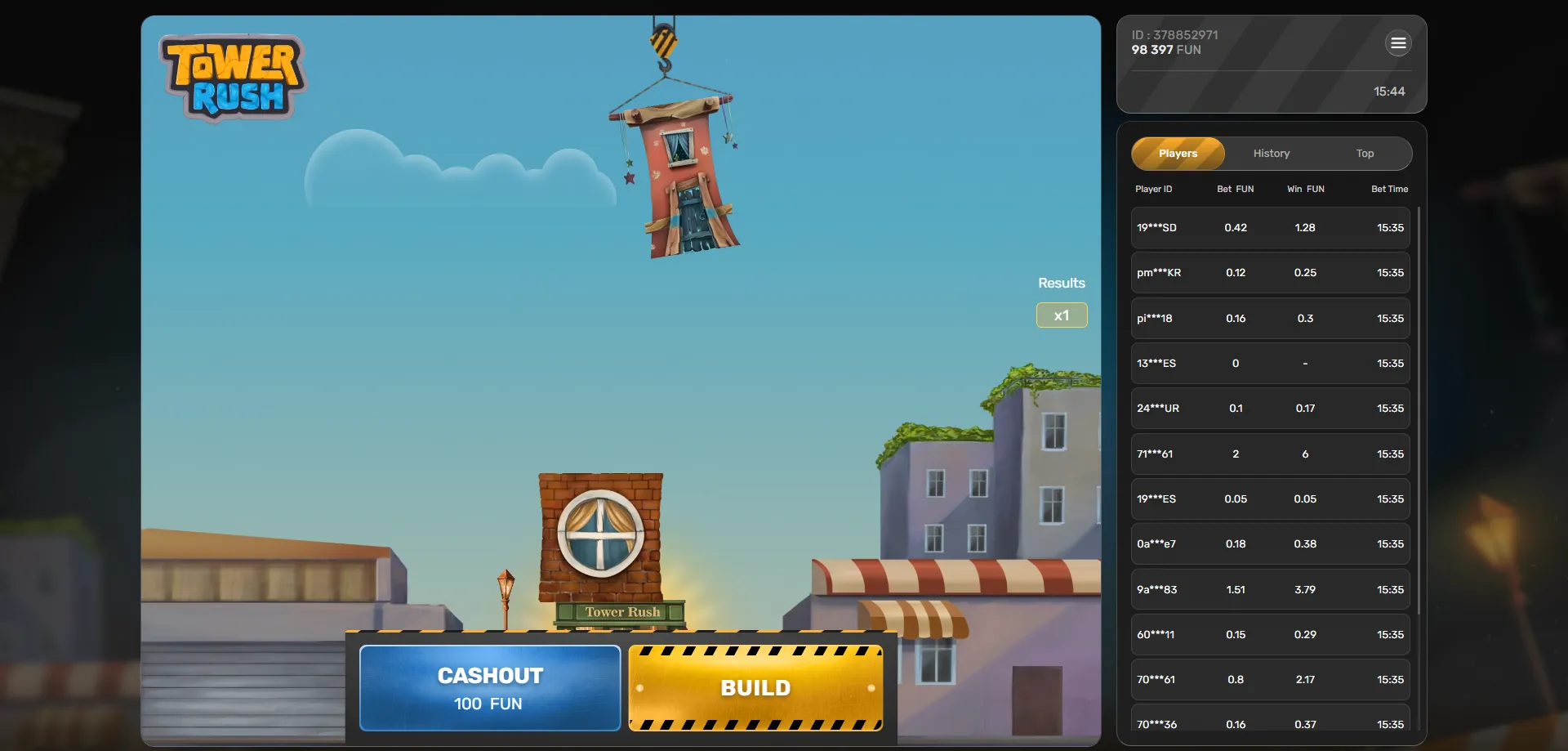
Tower Rush is a turbo-crash game from Galaxsys built on an RNG-certified engine, which means no outcome is predetermined or predictable. Every crane drop is independent, and no pattern from a previous round carries mathematical weight in the next. That said, tower rush strategy is not entirely without merit — it simply shifts focus from outcome prediction to decision-making discipline.
Where strategy genuinely helps is in three areas: how long you stay in a round before cashing out, how much of your bankroll you stake per round, and how you manage your emotional responses when sequences go against you. These controllable variables can meaningfully shape your long-term results even when the game's RNG decides each individual outcome. Think of it less as beating the system and more as playing within it smartly.
With an RTP of 98.50% — exceptionally high for any online casino game — Tower Rush is already designed to return a large proportion of money wagered over time. Strategy helps you stay at the table long enough to benefit from that favourable return rate rather than burning through your balance in a few unlucky rounds.
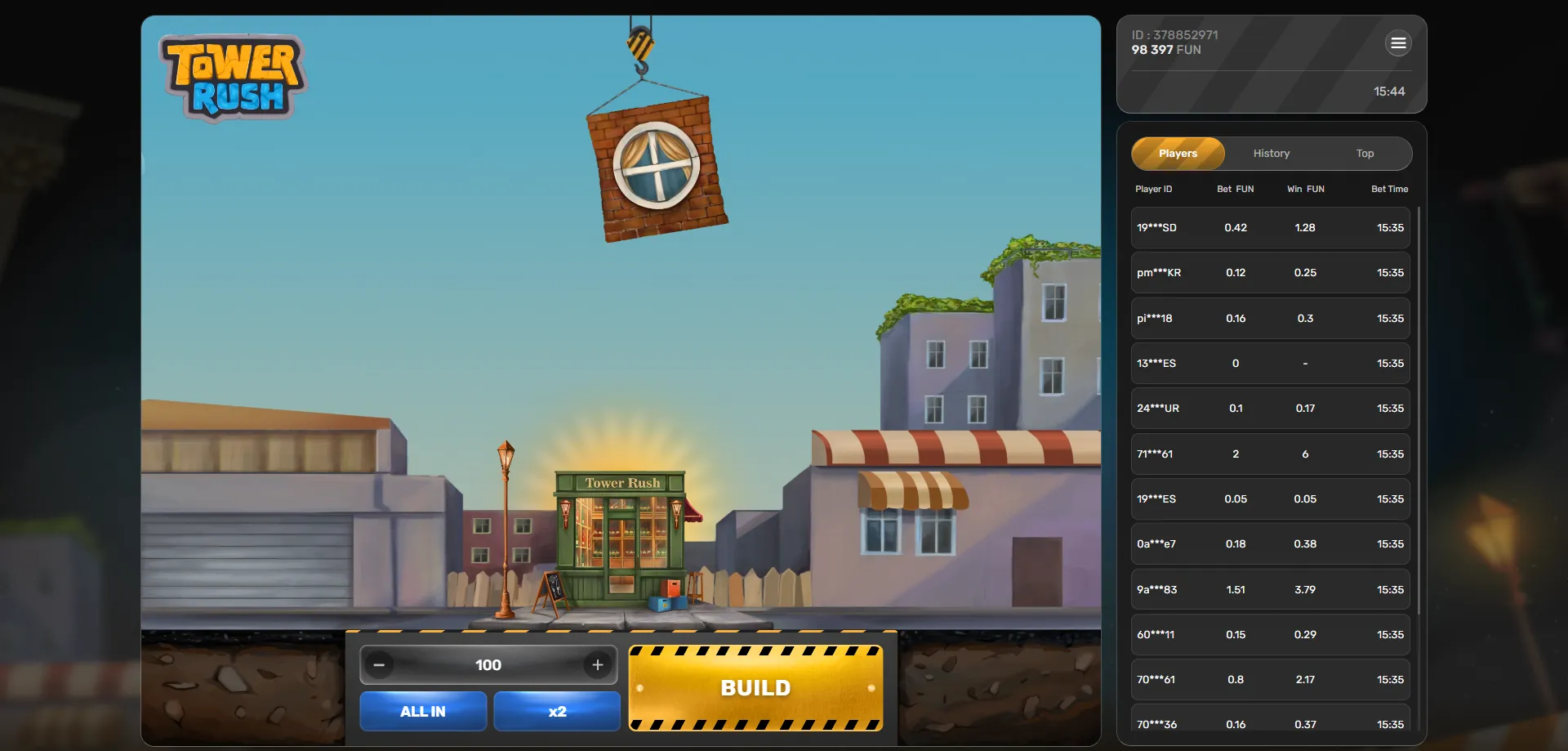
Every floor added to your tower increases the active multiplier and raises your potential payout — but it also increases the statistical probability that the next floor will fail. The game operates on medium volatility, meaning wins arrive with reasonable regularity but vary considerably in size. Short sessions may feel highly volatile, while longer sessions tend to smooth out toward the expected RTP.
The special bonus floors add a meaningful risk-management dimension. The Frozen Floor locks your winnings at a multiplier between 1.5x and 7x, protecting them even if the tower later collapses. The Temple Floor spins a bonus wheel with multiplier slices up to 7x. The Triple Build guarantees three additional floors automatically. These mechanics are not triggered by player choice — they appear randomly — but knowing their effect allows you to adapt your cashout timing when they appear.
Understanding the risk curve is the most important foundational skill in Tower Rush. Chasing a 20x or 30x multiplier in a medium-volatility crash game without a Frozen Floor safety net in place is a high-risk approach. Lower target multipliers, reached consistently, generate more stable results over a session.
Players who approach Tower Rush regularly tend to settle into one of three broadly recognised styles, each with its own risk-reward profile:
None of these styles is universally superior. Your ideal approach depends on session length, available bankroll, and personal risk tolerance. Many experienced players rotate between styles depending on how their session is progressing.
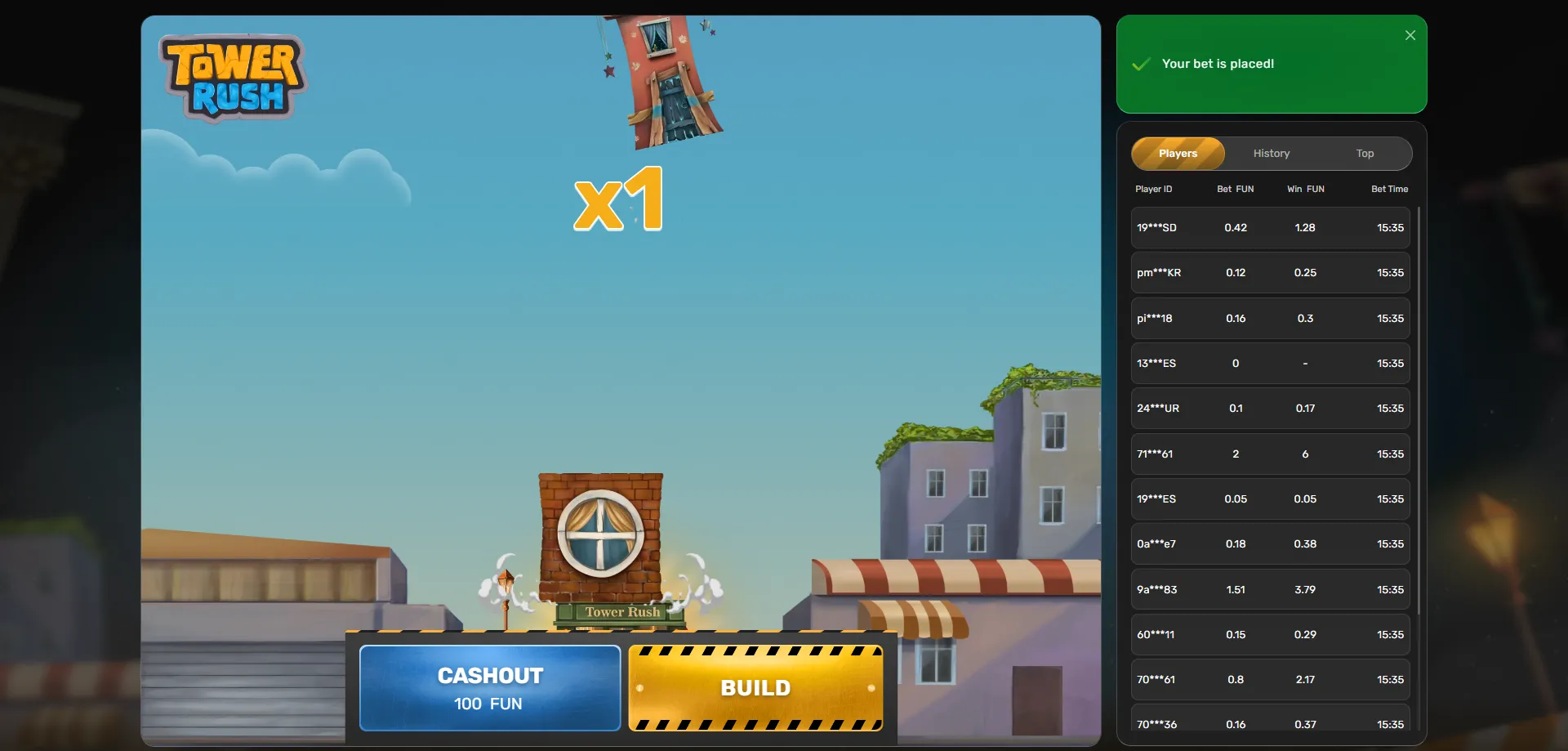
If you are new to Tower Rush, the single most effective piece of advice is to set a fixed cashout target before each round begins and honour it regardless of momentum. Decide in advance — 2x, 3x, whatever your target — and press Cash Out the moment you reach it. Allowing excitement to push you one floor further is where most beginners lose secured winnings.
A practical starter framework for beginners applying tower rush tips and tricks:
This framework will not produce spectacular wins, but it teaches the mechanics of timing and bankroll awareness that form the foundation of every more advanced approach.
Cashout timing is the central skill in Tower Rush — arguably more important than any other single factor. There is no single universal answer, but several situational guidelines are used by experienced players:
One practical rule many players use is a personal stop-win: once your session balance increases by a pre-set percentage — say 30% — cash out for the session entirely. Locking in a winning session is a strategy outcome in itself.
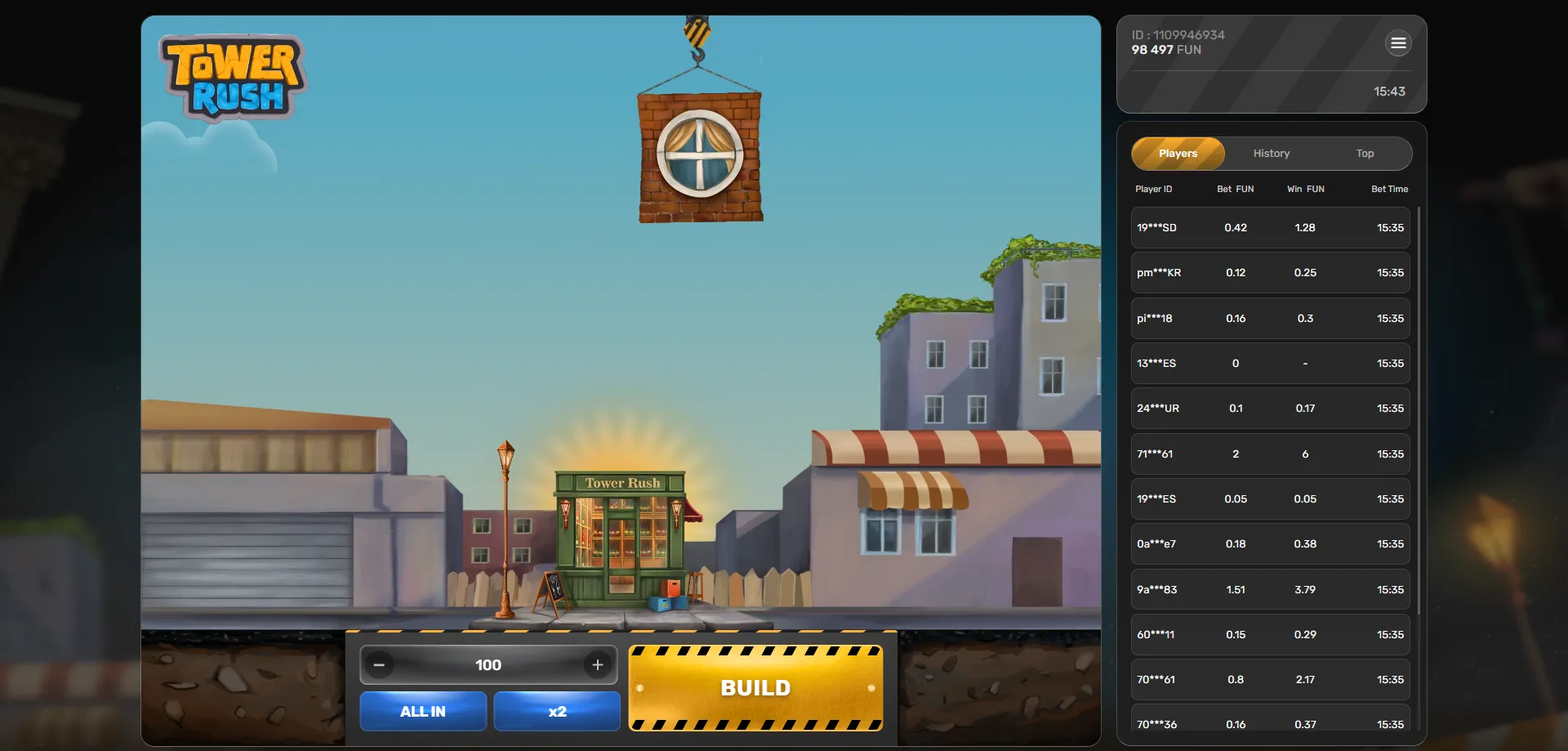
Effective bankroll management is the structural backbone of any tower rush strategy worth following. Without it, even well-timed cashouts cannot prevent a session from ending prematurely. A commonly recommended guideline is to keep individual bets between 1% and 3% of your total session bankroll.
For example, if your session budget is MYR 200, each round stake should sit between MYR 2 and MYR 6. This gives you 30–100 rounds of play before your bankroll is exhausted, which is sufficient exposure to experience the game's variance without gambling everything on a handful of rounds.
Additional bankroll principles worth adopting:
Keeping a simple record of your sessions is a tower rush lifehack that most casual players overlook. You do not need complex software — a basic spreadsheet or even a notes app works well. Track: session date, starting balance, ending balance, average target multiplier for the session, and any notable events (Frozen Floor hits, Temple Floor outcomes).
Over 10–20 sessions, patterns in your own behaviour become visible. You may discover that your conservative sessions consistently end in profit while your aggressive sessions erode gains. Or you may find that sessions where you stuck to a pre-set cashout target outperformed sessions where you made intuitive real-time decisions. This data is far more valuable than any generic strategy guide because it is specific to your individual play style and risk tolerance.
Review your tracking data roughly every two weeks. If your loss rate is consistently high, the data will point to whether the problem is cashout timing, stake sizing, or session length — each of which has a different corrective approach.
The Tower Rush Demo is a free-play version of the game available without registration or any deposit. It is a genuinely useful strategic tool, not just a way to try the game for fun. Demo mode replicates the real game's RNG behaviour, special floor mechanics, and cashout system fully — meaning the experience of timing decisions, recognising bonus floors, and managing the tension of a growing tower is transferable to real-money play.
Specifically, demo mode is most valuable for three purposes. First, it allows you to test a fixed cashout strategy — say, always exiting at 2x — across 50 or more rounds to understand how frequently you would succeed and what the average session result would look like. Second, it helps you build familiarity with the Frozen Floor and Temple Floor events so that you are not caught off guard by them during a real-money round. Third, it provides a pressure-free environment to practice emotional discipline: resisting the urge to hold one floor longer when momentum feels strong.
If you are new to crash-style games, spending at least one to two full sessions in demo mode before committing real money is strongly recommended. For more details on the full rule set and mechanics, visit the How to Play – Game Rules & Mechanics guide on this site, which covers the complete Tower Rush gameplay system in depth.
Tower Rush rounds last seconds. That speed is part of what makes the game exciting, but it also compresses the emotional cycle — excitement, greed, regret, and the impulse to chase — into a very short window. Emotional control is not a soft skill in Tower Rush; it is a strategic one with direct financial consequences.
The most common emotional pitfall is continuation bias: the feeling that because the tower has already stacked several floors successfully, it is more likely to survive the next one. Statistically, this is not the case — each floor is independent. Players who stay in rounds longer than their pre-set target because it "feels safe" are making an emotional decision, not a strategic one.
Practical habits that support emotional control include: setting your target multiplier before pressing Build (not during the round), taking a short break after any losing streak of three or more consecutive rounds, and never playing Tower Rush when tired, distracted, or emotionally heightened. Fast games reward calm, consistent decision-making far more than impulsive high-risk swings.
Even players who understand Tower Rush theoretically make predictable errors in practice. Awareness of these mistakes is itself a form of strategy:
Honest answer: strategy reduces the speed at which variance can damage your bankroll and improves the consistency of your session outcomes — but it does not eliminate risk, and no approach can overcome the house edge permanently. What disciplined strategy does achieve is meaningful: it extends your time in the game, allowing Tower Rush's 98.50% RTP to work in your favour across a larger sample of rounds rather than a few unlucky ones.
Players who apply consistent bankroll rules, fixed cashout targets, and regular demo-mode calibration will, over time, experience more stable results than those who play reactively. That is the realistic, measured promise of strategy in Tower Rush — not guaranteed wins, but a more controlled and informed experience that maximises the value of each session.
Tower Rush combines a genuinely engaging tower-building mechanic with one of the highest RTPs available in any crash game — 98.50% — and a set of special bonus floors that reward attentive, disciplined players. Strategy in this game is real and applicable, but it works at the level of cashout timing, bankroll management, and emotional discipline rather than outcome prediction.
Start with the demo, set clear session limits, honour your pre-set cashout targets, and use the Frozen Floor mechanic to make informed decisions about when staying longer is rationally justified. Whether you are adopting a conservative early-exit style or a balanced mid-range approach, the foundational principles remain the same: play with a plan, track your results, and adjust based on evidence rather than emotion.
Register an account today and receive an exclusive 100% match bonus on your first deposit plus 50 free spins on Tower Rush.
🚀 Play Tower Rush🔒 18+ · T&C Apply · Play Responsibly